Free Online Topview AI Alternative: Create AI Videos Instantly, No Registration
Topview AI free is what most people search before they commit, so this page hands you a working generator first and explains the trade-offs after.
Independent site — not affiliated with Topview or topview.ai. Or run Seedance, Veo and Kling →
What open video models are putting out right now
Clips published on X this month. Every one links back to the post it came from — press play, then go make your own above.
A slow push through a stone hall as the light collapses to a ring
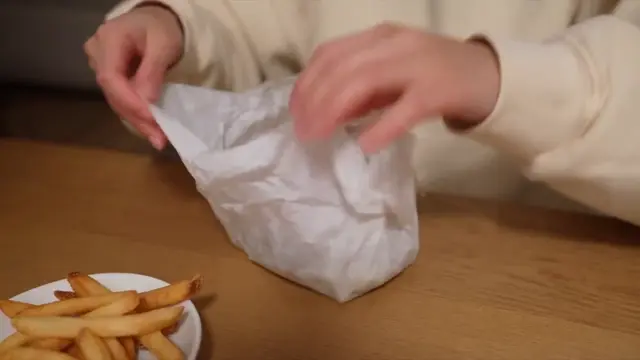
source post →Hand-held food shot — the kind of spot a product clip usually needs a crew for
source post →Illustrated scene held steady across a full shot, character and props intact
source post →Fast 2D action with consistent staging shot to shot
source post →Crowded deck, fire and rigging — a wide action shot held together across the cut
source post →Tracking shot down a street, subject and board consistent through the trick
source post →Flat 2D story beats — a look that costs an illustrator days to key by hand
source post →Use the Topview AI style generator now, no sign-up
The Topview AI style generator below runs in your browser on open models — Wan 2.2 and LTX 2.5. Upload one image, describe the motion you want, press generate. No account, no card, no download, no queue token.
Three things this Topview AI alternative is good at, based on what comes back most reliably: a subject that stays itself across the shot, motion that reads as intentional rather than drifting, and short clips that hold together end to end. That covers a product spin, a portrait that comes alive, a landing-page hero, a social cut.
What Topview AI free actually gives you

Every credit-based product has the same shape, and the Topview AI free allowance is no exception: enough to see the interface and render a test, sized for evaluation rather than delivery. That is the standard arrangement across this whole category, because video inference costs real money per second of output.
The useful consequence of how Topview AI free is sized is about order. Run the shot type free first — right here, above — and see the output. Then decide where the paid budget goes. People who do it the other way round subscribe, discover the ceiling on day three, and sit on credits they never spend.
So treat Topview AI free as step one of a test, not as a plan, and treat this page as step zero: the same class of shot, no signup at all.
Sponsored
What Topview AI users bring to a first generation
The single biggest lever on output quality is the input image. Everything else — model choice, prompt wording, seed — moves the result less than this does.
- STEP 1
Use a clean subject
One clear focal point, good separation from the background. Busy scenes give the model too many things to keep stable, and the ones it drops are usually the ones you cared about.
- STEP 2
Go higher resolution than you think
Upscaling before generation is cheap; recovering detail afterwards is not.
- STEP 3
Say what moves, not what exists
The image already establishes the scene. Your prompt should describe the change — the camera pushing in, the fabric settling, the head turning toward the light.
- STEP 4
Keep the motion small on the first pass
Modest movement holds together far more reliably than a dramatic one, and it tells you whether the subject survives at all. Escalate on the second run once you know it does.
These four habits transfer directly. Whether you end up on Topview AI free, on a hosted generator, or on an engine you run yourself, the input discipline is the same — and it is the part most people skip. A clean, high-resolution subject with a motion-only prompt will outperform a rushed setup on a more expensive model almost every time, which is exactly why testing here first is worth the thirty seconds.
When you outgrow the Topview AI free path
The free models cover the common cases well. You start wanting commercial engines when the brief gets specific, and the gaps are worth naming because each is a real reason to spend.
Longer unbroken takes
Open models are tuned for short shots. If your storyboard calls for a continuous ten seconds, that is an engine question, not a prompt question.
Directed camera work
Commercial engines expose camera movement as a parameter — you specify the dolly, the arc, the push, and get that move.
Audio generated with the picture
Sound designed alongside the frame beats sound laid on afterwards, and it is a capability, not a setting.
Faces at close range
Portrait work at scale is where the quality gap is most visible and most worth paying to close.
Each of those maps to a specific engine — Seedance, Veo, Kling — and each is available per generation on the hosted side, so you pay for the shot that needs it rather than for every shot.
Picking a model for the shot you have
Two engines are available on this page — the same shot types a Topview AI project starts from — and they answer to different briefs.
Wan 2.2
is the steadier of the two on subject consistency. When the thing that matters is that the product stays the same product, or the face stays the same face, start here. It handles modest, believable movement well and rarely invents detail that was not in the source frame.
LTX 2.5
leans toward motion range. It will attempt bigger movement and more scene change, which makes it the better first try when the shot is about something happening rather than something existing. It also takes a text-only prompt, so you can generate without an input image at all.
The practical routine is to run Wan first for anything with a subject that has to survive, and LTX first for anything atmospheric. If the first result misses, switching engines on the same prompt is usually faster than rewriting the prompt for the same engine — and it costs nothing here.
That habit is worth carrying into paid work too. The teams who get the most from a Topview AI free trial arrive already knowing which engine suits their shot type, so the trial gets spent on the product's own strengths — the planning, the assembly, the avatars — rather than on rediscovering model basics.
How this page fits with Topview AI free
Use this generator before you spend a Topview AI free credit, because it answers the question that actually blocks people: does image-to-video, right now, do the thing I have in mind? It takes about thirty seconds and costs nothing.
If the answer is yes, you know the technique works and the remaining question is only which engine and which product. If your project is mostly assembly — many scenes, avatars, lip sync, a canvas that holds the whole thing — the Topview AI agent layer is what you would be buying, and its free allowance is the right next step.
If the answer is that the shot needs more than the open models give, you already know exactly which capability you are shopping for, which makes the paid decision fast instead of speculative.
Common questions about running Topview AI free
- Do I need an account to use the generator on this page?
- No. It runs in your browser with no sign-up and no card.
- Which models does it run?
- Wan 2.2 and LTX 2.5 — open video models covering image-to-video and text-to-video.
- How long can the output be?
- Short clips, in the range these open models are tuned for. For longer unbroken takes, commercial engines are the answer.
- Is there a limit?
- Compute is shared, so heavy repeated use gets throttled. For evaluating a shot type it is more than enough.
- Can I use the results commercially?
- Check the licence of the specific model you generated with — terms differ per model and change over time.
- Is this the official Topview AI free tier?
- No. This site is independent. The Topview AI free allowance lives on their own product; this page gives you a no-account way to test the same class of shot first.
- What is the difference between this and Topview AI free?
- This page is a raw generator: one image, one prompt, one clip, no account. Topview AI free is a trial of an agent that plans and assembles multi-scene projects. They answer different questions, and running this one first makes the trial more useful.
- Which should I try first?
- This one, because it costs nothing and takes half a minute. Once you know the shot works, the Topview AI free trial tells you whether the assembly layer is worth paying for on top.
Try the shot before you pay for it
Run it free in the browser — no account, no card. Then send the two or three hero shots to a premium engine.